Search
No search results found
No search results found
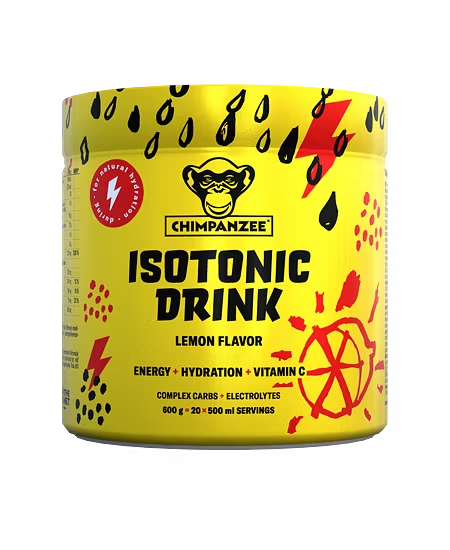
Chimpanzee Isotonic Drink Lemon 600g
Chimpanzee Isotonic Drink Lemon 600 g is a sports drink powder with carbohydrates, minerals and vitamin C for running, cycling, skiing and other endurance training.
A 30g serving provides 27g of carbohydrates and 112 kcal . The powder can be mixed with 375ml of water for an isotonic drink or with 500ml of water for a more diluted, hypotonic drink. The can contains approximately 20 servings and provides up to 10 litres of ready-made sports drink.
See our entire range from Chimpanzee here!
Chimpanzee Isotonic Drink Lemon is a carbohydrate and mineral drink developed for longer training sessions and endurance activities. It is suitable when you want to get both fluid and energy through the same bottle during, for example, running, cycling, cross-country skiing, triathlon or hiking.
The carbohydrate mixture consists of maltodextrin, glucose, isomaltulose and sucrose . The combination provides both higher and lower molecular weight carbohydrates. Isomaltulose makes up 20 percent of the product and is a source of glucose and fructose.
Each 30 g serving contains:
27 g carbohydrates
22 g sugars
112 calories
183 mg sodium
72 mg potassium
45 mg calcium
23mg magnesium
186 mg chloride
81 mg of vitamin C
The powder can be mixed in two different ways depending on the application. With 500 ml of water you get a hypotonic drink with a stated osmolality of 210 mOsm/kg. The manufacturer recommends this mixture before and during physical activity. With 375 ml of water you get an isotonic drink of 280 mOsm/l, which the manufacturer mainly recommends for adults after exercise.
The Lemon flavor has a fresh citrus profile that is great for longer sessions when a light and tart drink is often easier to continue drinking than very sweet alternatives.
27 g carbohydrates per serving
112 kcal per serving
Four different carbohydrate sources
Contains 20 percent isomaltulose
With sodium, potassium, calcium, magnesium and chloride
81 mg of vitamin C per serving
Can be mixed isotonically or hypotonically
Fresh lemon flavor
Suitable before, during and after physical activity
Approximately 20 servings per jar
Makes up to 10 liters of finished drink
Contains no added caffeine
The product information lists it as gluten-free, but trace information is available
Chimpanzee's official product page describes Lemon 600 g as a carbohydrate and mineral-based drink for energy and hydration before and during activity.
| Property | Information |
|---|---|
| Product | Chimpanzee Isotonic Drink |
| Taste | Lemon |
| Product type | Carbohydrate and mineral drink |
| Net weight | 600g |
| Serving size | 30g |
| Number of servings | About 20 |
| Hypotonic mixture | 30 g in 500 ml water |
| Isotonic mixture | 30 g in 375 ml water |
| Carbohydrates | 27g per serving |
| Energy | 112 kcal per serving |
| Vitamin C | 81 mg per serving |
| Caffeine | No |
| Recommended maximum dose | 3 servings per day |
| Age limit according to the manufacturer | Not suitable for children under 6 years old |
The 600 g package is stated to provide 20 servings of 500 ml.
| Nutritional value | Per 100g | Per serving, 30 g |
|---|---|---|
| Energy | 1,585 kJ/373 kcal | 470 kJ/112 kcal |
| Fat | 0 g | 0 g |
| Of which saturated fat | 0 g | 0 g |
| Carbohydrates | 90g | 27g |
| Of which sugars | 73g | 22g |
| Polyols | 0 g | 0 g |
| Fiber | 0 g | 0 g |
| Protein | 0 g | 0 g |
| Salt | 1.5g | 0.45g |
| Vitamin C | 270 mg | 81 mg |
The nutritional values come from Chimpanzee's current product declaration for Lemon.
| Mineral | Per serving, 30 g |
|---|---|
| Sodium | 183 mg |
| Potassium | 72 mg |
| Calcium | 45 mg |
| Magnesium | 23 mg |
| Chloride | 186 mg |
Vitamin C contributes to normal energy metabolism, protecting cells against oxidative stress and reducing tiredness and fatigue.
Maltodextrin, glucose, isomaltulose (20 percent), sucrose, acidity regulators: citric acid, calcium lactate, sodium citrate, sodium chloride, magnesium citrate, flavoring, L-ascorbic acid (vitamin C), potassium citrate, potassium dihydrogen phosphate and potassium chloride.
Isomaltulose is a source of glucose and fructose.
The product may contain traces of:
Milk
Soya
Gluten
Egg
Mix:
30g powder
500ml water
It provides a hypotonic drink with a stated osmolality of approximately 210 mOsm/kg . This mixture is recommended by Chimpanzee before and during physical activity.
Mix:
30g powder
375ml water
It provides an isotonic drink with a stated osmolality of approximately 280 mOsm/l . The manufacturer recommends this concentration for adults after exercise.
Fill the bottle with 375 or 500 ml of water.
Add 30 g of powder.
Close the bottle tightly.
Shake until the powder is completely dissolved.
Drink regularly before, during or after activity depending on the chosen concentration.
Do not exceed the manufacturer's recommended daily amount of three servings, a total of 90 g of powder . The product is not suitable for children under six years of age, according to the manufacturer.
One serving provides 27 g of carbohydrates:
1 serving: 27 g carbohydrates
2 servings: 54 g carbohydrates
3 servings: 81 g carbohydrates
During longer activities, the drink can make up all or part of the carbohydrate intake. It can also be combined with energy gels, chews, bars or regular food.
Add up the carbohydrates from all products. A higher intake should be gradually introduced during regular training sessions before the same plan is used during an important race.
Chimpanzee Isotonic Drink contains:
Maltodextrin
Glucose
Isomaltulose
Sucrose
Maltodextrin is a glucose-based carbohydrate commonly used in sports drinks. Glucose and sucrose provide readily available carbohydrates, while isomaltulose is made up of glucose and fructose.
According to Chimpanzee's product information, the powder consists of approximately 40 percent maltodextrin, 20 percent glucose, 20 percent isomaltulose, and 15 percent sucrose.
Despite the product name, the drink can be mixed in two concentrations.
The more diluted mixture contains the same amount of energy and carbohydrates but more water. The manufacturer recommends it before and during physical activity.
Suitable when:
You want to combine fluid and energy during the workout
The temperature is high.
You sweat a lot.
You want a milder taste
You prefer a less concentrated sports drink
This blend is more concentrated and contains the same 27g of carbohydrates in a smaller volume of liquid. Chimpanzee recommends it primarily for adults after exercise.
Suitable when:
You want to get the same amount of carbohydrates in a smaller volume of liquid
You prefer a clearer taste
The drink is used after completing the activity.
Fluid is also taken from other sources
Use the mixture appropriate for the duration of the activity, temperature, and individual tolerance.
Running and long workouts
Trail running and ultra running
Road cycling
Mountain biking and gravel
Triathlon
Cross-country skiing
Vasaloppet and other long-distance races
Hiking and outdoor activities
Multisport and adventure races
Training in hot weather
Activities where liquid energy is preferred
Before, during or after physical activity
The manufacturer specifically highlights running and cycling as suitable areas of use.
The jar contains 600 g of powder and each serving is 30 g:
600 ÷ 30 = 20 servings
It corresponds to:
20 bottles of 500 ml hypotonic drink
Up to 10 liters of ready-made hypotonic drink
20 bottles of 375 ml isotonic drink
Total 7.5 liters of ready-made isotonic drink
Chimpanzee Isotonic Drink:
27 g carbohydrates per serving
112 calories
Contains minerals and vitamin C
Clearly contributes to energy intake
Can be mixed hypotonically or isotonically
Electrolyte tablets:
Usually contains little or no carbohydrates
Provides very little energy
Suitable when the energy is taken separately
Can be combined with gels, bars or food
Chimpanzee Isotonic Drink is suitable when the drink is to be part of an energy plan. Electrolyte tablets are better suited when you mainly want to flavor the water and add salts without a large amount of carbohydrates.
Both products combine carbohydrates and minerals, but the amounts and mixing instructions differ.
Chimpanzee Isotonic Drink Lemon:
27 g carbohydrates per 30 g serving
112 calories
30 g in 375 or 500 ml of water
Contains four carbohydrate sources
With 20 percent isomaltulose
Contains vitamin C
SiS GO Electrolyte:
Approximately 36 g of carbohydrates per serving
Normally mixed with 500 ml of water
Maltodextrin and fructose as main carbohydrate sources
Higher carbohydrate content per bottle
Chimpanzee is suitable when you want a slightly lower amount of carbohydrates per bottle and the option to choose between isotonic and hypotonic concentration.
The Lemon variant contains no added caffeine, making it suitable when you:
Working out late in the day
Want to avoid caffeine
Want to control caffeine intake separately
Already using caffeine gels
Want to use the same drink for several hours
Are sensitive to caffeine
Store the jar in a cool, dry place with the lid tightly closed. Protect the powder from moisture, direct sunlight and high temperatures.
Always use a dry scoop. Moisture can cause the powder to clump and affect its shelf life.
Ready-mixed drinks should be kept refrigerated if not consumed immediately. Always follow the instructions on the packaging.
Do not exceed three servings or 90 g of powder per day.
The product is not suitable for children under six years of age.
Adjust fluid intake according to temperature, intensity and sweat loss.
Include the drink's 27 g of carbohydrates in your total energy plan.
Always test concentration and dosage during training before competition.
Check the relevant packaging in case of allergy or hypersensitivity.
Sports nutrition does not replace a varied and balanced diet.
The can contains 600 g of sports drink powder.
One serving is 30 g. The jar therefore provides approximately 20 servings.
One serving contains 27 g of carbohydrates.
A 30 g serving provides 470 kJ, equivalent to 112 kcal.
Mix 30 g with 500 ml of water for a hypotonic drink or with 375 ml of water for an isotonic drink.
Chimpanzee recommends the hypotonic mixture with 500 ml of water before and during physical activity.
The manufacturer recommends the isotonic mixture with 375 ml of water for adults after exercise.
The product contains maltodextrin, glucose, isomaltulose and sucrose.
Isomaltulose makes up 20 percent of the product.
The product contains, among other things, sodium, potassium, calcium, magnesium and chloride.
One serving contains 81 mg of vitamin C, equivalent to approximately 101 percent of the reference intake.
No, the ingredients list does not indicate any added caffeine.
Yes, it can be part of your energy and hydration plan during a marathon. Add up the carbohydrates from the drink and other energy products.
Yes. It is suitable for longer cycling sessions because both fluid and carbohydrates can be taken through the same bottle.
The official website labels the product as gluten-free, but also states that traces of gluten may be present. Always check the relevant packaging in case of celiac disease or severe hypersensitivity.
The product may contain traces of milk, soy, gluten and eggs.
The manufacturer specifies a maximum of three servings, corresponding to a total of 90 g of powder per day.
The manufacturer states that the product is not suitable for children under six years of age.