Search
No search results found
No search results found
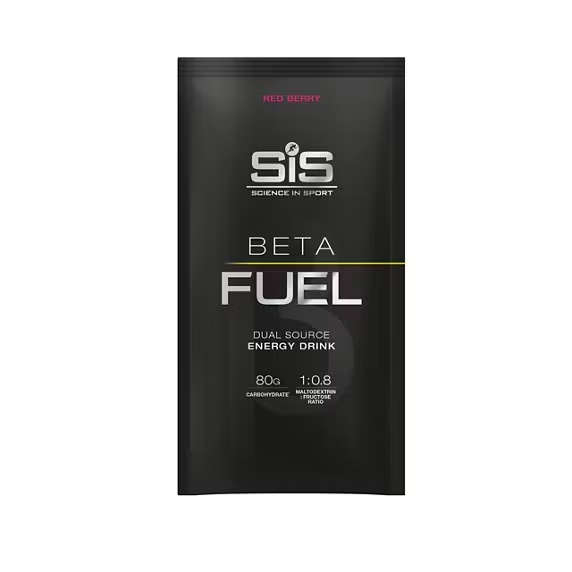
SiS Beta Fuel 80 Sachet - Red Berry
SiS Beta Fuel 80 Sachet – Red Berry is a carbohydrate-rich sports drink powder for long workouts, races and endurance activities. Each 82g sachet provides 80g of carbohydrates from maltodextrin and fructose in a ratio of 1:0.8 .
Mix the entire sachet with 600 ml of water and drink regularly during your activity. The fruity red berry flavour is suitable for cycling, running, triathlon, cross-country skiing and other activities lasting longer than two hours.
See our entire range from Science In Sport here!
SiS Beta Fuel 80 Red Berry is designed for endurance athletes who want to be able to provide a large and clearly measured amount of carbohydrates during long-term training and competition. A single serving bag provides 80 g of carbohydrates , making it easy to plan energy intake during, for example, cycling races, triathlons, ultra-running and long ski sessions.
The carbohydrates come from two sources: maltodextrin and fructose . They are combined in SiS' optimized ratio of 1:0.8 , designed for energy plans where a larger amount of carbohydrates is to be consumed during endurance activity.
One sachet contains 82 g of powder and is mixed with 600 ml of water. When mixed as recommended, an isotonic drink with a neutral pH profile is formed. SiS recommends that the drink be consumed gradually during longer training sessions and competitions.
The Red Berry flavor has a light and fruity berry character that provides variation from traditional citrus and orange flavors. The product can be used as the main carbohydrate source during part of the activity or combined with Beta Fuel Gel, Energy Chews and other sports nutrition products.
SiS places the Beta Fuel series primarily within activities lasting around two hours or longer. A high carbohydrate intake should always be trained in gradually and adjusted according to individual tolerance.
80 g carbohydrates per serving bag
Maltodextrin and fructose in a ratio of 1:0.8
Approximately 320 kcal per serving
Mix with 600 ml of water
Isotonic formula when mixed as recommended
Neutral pH profile
Fruity taste of red berries
Clear portion size for easy energy planning
Developed for endurance activities over two hours
Convenient disposable bag
Contains no added caffeine
Can be combined with Beta Fuel Gel and Energy Chews
Informed Sport tested
Science in Sport states that the company's products are covered by the Informed Sport program.
Product: SiS Beta Fuel 80
Flavor: Red Berry / red berries
Product type: Carbohydrate-rich sports drink powder
Packaging: Portion bag
Net weight: 82g
Serving size: 1 bag
Mixture: 1 sachet in 600 ml of water
Carbohydrates per serving: 80 g
Sugars per serving: 35 g
Energy per serving: Approximately 1,359 kJ/320 kcal
Carbohydrate sources: Maltodextrin and fructose
Carbohydrate ratio: 1:0.8
Caffeine: No
Use: During prolonged physical activity
The nutritional values and ingredient information come from SiS' current European product information for Red Berry.
| Nutritional value | Per 100g | Per serving, 82 g |
|---|---|---|
| Energy | 1,658 kJ/390 kcal | 1,359 kJ/320 kcal |
| Fat | 0 g | 0 g |
| Of which saturated fat | 0 g | 0 g |
| Carbohydrates | 98g | 80g |
| Of which sugars | 42g | 35g |
| Protein | 0 g | 0 g |
| Salt | 0 g | 0 g |
The nutritional information may change between markets and production runs. The information on the current portion bag always applies.
Maltodextrin from corn (57%), fructose (42%) and flavorings.
The product has a short list of ingredients, with maltodextrin and fructose accounting for almost all of the content. Always check the label on the delivered package before consumption, especially in case of allergies or hypersensitivity.
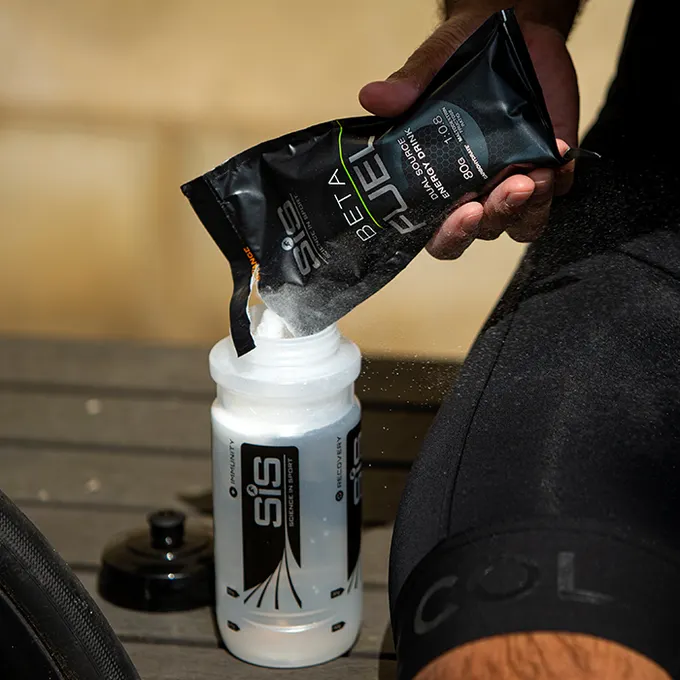
Fill a sports bottle with 600 ml of water.
Empty the entire sachet into the bottle.
Close the bottle tightly.
Shake until the powder has dissolved.
Drink small amounts regularly during the activity.
Science in Sport recommends one bag per hour or combining the product with Beta Fuel Gels and Energy Chews to reach the individually planned carbohydrate amount.
One bag provides 80 g of carbohydrates :
½ bottle provides approximately 40 g of carbohydrates
1 bag provides 80 g of carbohydrates
2 bags provide 160 g of carbohydrates
3 bags provide 240 g of carbohydrates
SiS suggests around 80–120g of carbohydrates per hour as a possible target during longer endurance activities. This is a high intake that is not suitable for everyone and should be built into gradually during regular training sessions.
Add up the carbohydrates from drinks, gels, chews, bars and regular food. More energy is not automatically better if your stomach is not used to the amount.
Road cycling and cycling races
Gravel and mountain biking
Triathlon
Long-distance running
Trail running and ultra running
Marathon
Cross-country skiing
Vasaloppet and other long-distance races
Multisport and adventure races
Long workouts over two hours
Activities where solid energy is difficult to consume
Athletes planning a high carbohydrate intake
A bag of Beta Fuel 80 provides 80g of carbohydrates in one bottle. The clear portion format makes it easy to follow energy intake without having to count multiple smaller products.
For example, a bottle can be drunk gradually over an hour. However, the rate of intake needs to be adjusted according to how long the activity lasts, how much other energy you use, and how your stomach reacts.
Fluid intake should not be driven solely by carbohydrate requirements. In hot weather you may need more water than the 600ml included in the Beta Fuel bottle, while the requirement may be lower in cold conditions.
SiS Beta Fuel uses maltodextrin and fructose in a ratio of 1:0.8 . Maltodextrin is a glucose-based carbohydrate, while fructose is absorbed via a different transport pathway in the intestine.
By combining different carbohydrate sources, the product is designed for situations where a larger amount of carbohydrate is needed during physical activity. SiS uses the same basic principle in Beta Fuel drinks, gels and chews.
When the entire bag is mixed with 600 ml of water, the drink will have the concentration recommended by the manufacturer for an isotonic solution.
Don't use less water just to make the drink stronger. A more concentrated mix will be sweeter and may be harder to consume during high intensity.
For the best mix:
Use recommended amount of water
Add the powder to the bottle
Shake well
Let the drink stand for a short time if necessary.
Shake again if powder remains.
Test the mixture during training before competition
SiS states that 500–600 ml of water can be used, but that 600 ml is needed to create the intended isotonic concentration.
Red Berry has a fruity flavor profile that can provide variety during long activities. It goes well with, for example:
Neutral energy gels
Citrus-based gels
Beta Fuel Energy Chews
Separate water
Caffeine gel during the latter part of the race
Salty or less sweet energy alternatives
Varying the taste and consistency can make it easier to follow the energy plan when the activity lasts for several hours.
SiS Beta Fuel 80:
80 g carbohydrates per bottle
Maltodextrin and fructose in a ratio of 1:0.8
Mix with 600 ml of water
Developed for a high carbohydrate intake
Very low amount of salt
SiS GO Electrolyte Powder:
Approximately 36 g carbohydrates per 500 ml
Contains added electrolytes
Lower carbohydrate content per bottle
Fits a more moderate energy and fluid plan
Beta Fuel 80 is suitable when you want to get a large part of your energy from the drink. GO Electrolyte is better suited when you want to combine a lower amount of carbohydrates with added electrolytes.
Beta Fuel 80 Sachets:
80 g carbohydrates
Mix with 600 ml of water
Drink gradually
Combines energy and fluid
Suitable for longer activities
Beta Fuel Gel:
40 g carbohydrates
Ready to consume
Requires no mixing
Simple when water is available separately
Easy to carry in a pocket or running vest
One bottle of Beta Fuel 80 contains the same amount of carbohydrates as two Beta Fuel Gels.
Beta Fuel 80 provides the carbohydrates in liquid form and requires you to carry water with you.
Beta Fuel Energy Chews provide around 45–46 g of carbohydrates in a soft and chewable format.
The drink may be easier during high intensity when you don't want to chew. Chews may be better suited during slower parts of the race or when you want to vary the consistency.
Beta Fuel 80 is primarily a carbohydrate product and contains very little salt, so it should not automatically be considered a complete electrolyte drink for hot or very sweaty activities.
Plan fluid and electrolytes according to:
Temperature and humidity
Activity duration
Training intensity
Individual sweat rate
How salty your sweat is
Access to hydration stations
Other drinks and sports nutrition
In case of high sweat loss, separate water and electrolytes may be needed in addition to Beta Fuel.
Red Berry contains no added caffeine, making it suitable for:
Want to control caffeine intake separately
Are sensitive to caffeine
Working out late in the day
Want to use the same drink for several hours
Planning a caffeine gel during the latter part of the race
Have already consumed coffee before the start
Store the sachet in a dry and cool place, protected from direct sunlight and high temperatures.
Use the entire bag after opening. The powder may absorb moisture and start to clump if an opened package is stored.
Ready-mixed drink should be consumed the same day. If mixed in advance, keep refrigerated.
Beta Fuel 80 contains a large amount of carbohydrates per serving and is primarily designed for longer endurance activities. The product is not normally needed during short or leisurely workouts.
A high carbohydrate intake can cause stomach upset if it has not been trained in. Therefore, test the taste, concentration, amount and rate of intake during regular training sessions before using the product in competition.
Sports nutrition does not replace a varied diet or an individually adapted energy, fluid and electrolyte plan.
One sachet contains 82 g of powder.
One bag provides 80 g of carbohydrates.
Mix the entire bag with 600 ml of water for the recommended isotonic concentration.
One bag provides approximately 1,359 kJ, equivalent to 320 kcal.
The current European nutrition label states 35 g of sugars per bag.
The product contains maltodextrin from corn and fructose.
SiS specifies a ratio of 1:0.8 between maltodextrin and fructose.
The product is primarily designed for longer training sessions and competitions lasting around two hours or more.
SiS recommends drinking the drink little and often during longer endurance activities. One sachet per hour is a possible plan for those who have trained for a high carbohydrate intake.
SiS states that one serving can be mixed with 500–600 ml, but 600 ml is recommended to create an isotonic drink.
The product contains very little salt and is primarily a carbohydrate drink. Electrolytes may need to be planned separately in case of high sweat loss.
No, Red Berry does not contain any added caffeine.
Yes. Add up the carbohydrates from drinks, gels, chews, bars and other foods so that the total amount fits your energy plan.
Yes, it is particularly suitable during longer cycling sessions and competitions where a bottle can be drunk gradually.
Yes, but 600 ml of liquid can be heavy to carry. The product is therefore best suited when the drink can be carried in a vest, soft bottle or picked up at energy stations.
Science in Sport states that the company's products are covered by the Informed Sport program.