Search
No search results found
No search results found
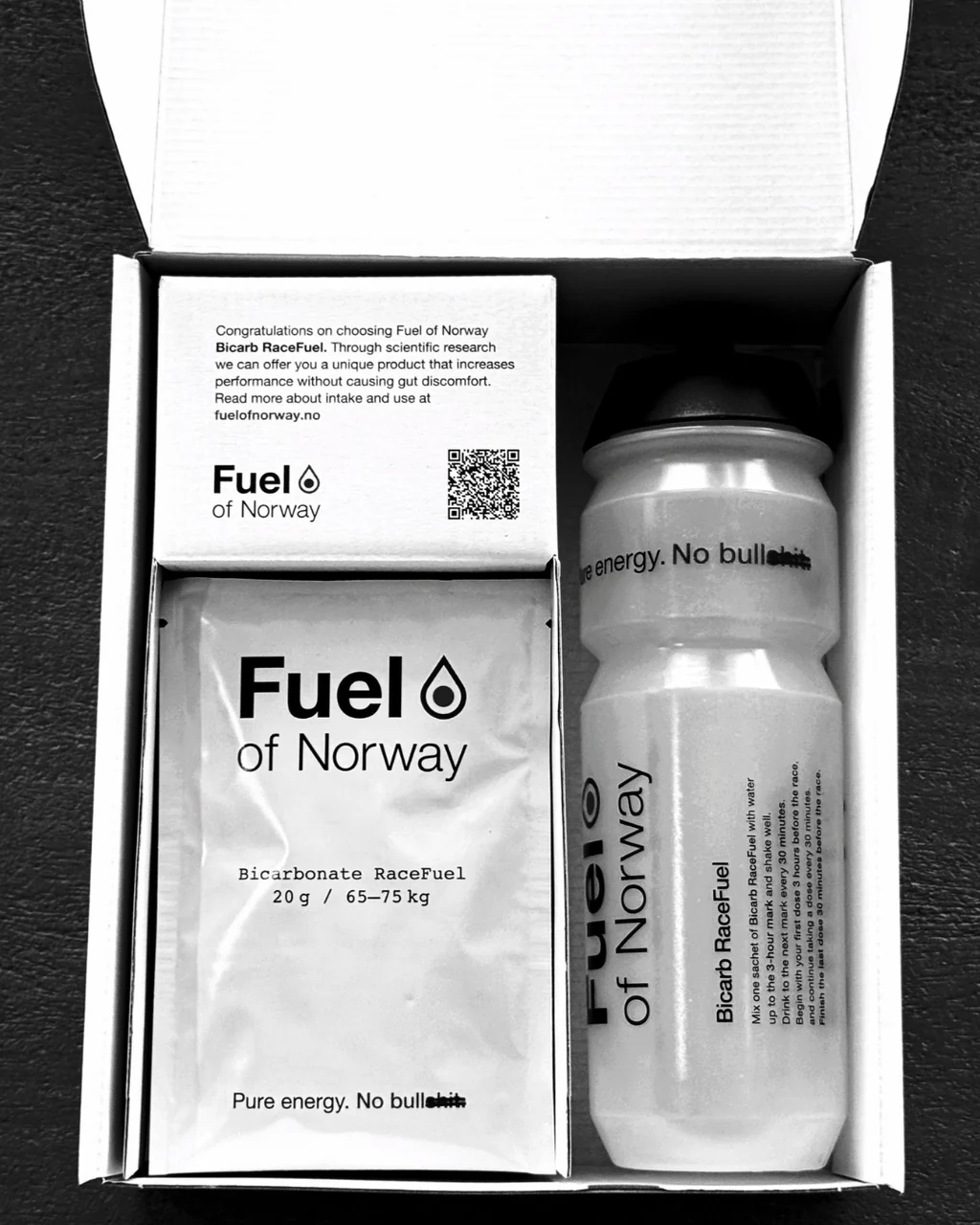
Fuel of Norway Bicarbonat RaceFuel Starterpack
Fuel of Norway Bicarbonate RaceFuel Starterpack is a complete starter pack for those who want to use bicarbonate as part of your competition preparation for high-intensity races and hard workouts.
The package contains 6 doses of Bicarbonate RaceFuel and a specially developed dosing bottle . Each dose is mixed with ice-cold water according to Fuel of Norway's intake protocol and provides both the selected amount of bicarbonate, approximately 6 dl of liquid and 80 g of carbohydrates .
The product is available in several dosage levels based on body weight: 15 g, 17.5 g, 20 g, 22.5 g and 25 g bicarbonate . Fuel of Norway recommends that you choose the dose closest to 0.3 g bicarbonate per kg body weight .
See our entire range from Fuel of Norway here!
Fuel of Norway Bicarbonate RaceFuel Starterpack is developed for endurance athletes who want to prepare their body for high-intensity exercise, such as running, cycling, cross-country skiing, roller skiing, triathlon and other competitions where the acid and lactate load is high.
Bicarbonate is used in sports nutrition to increase the buffering capacity of the blood. Fuel of Norway describes the product as a complete PreRace drink where bicarbonate is combined with fluid and carbohydrates in a controlled intake protocol.
One of the major challenges with bicarbonate has traditionally been stomach and intestinal problems. Fuel of Norway states that they, together with Norwegian research environments, have developed a new method of intake that will provide better buffering capacity with significantly less stomach challenges.
The starter pack is especially suitable for those who want to test the product during training before competition. Bicarbonate should not be tried for the first time on competition day, as tolerance, stomach and timing vary between individuals.
6 doses of Bicarbonate RaceFuel
1 specially developed dosing bottle
Intake protocol for gradual intake before starting
Selectable bicarbonate dose based on body weight
Fuel of Norway starter pack contains 6 doses of Bicarbonate and a special bottle .
| Variant | Recommended body weight |
|---|---|
| 15g | 47–57 kg |
| 17.5g | 57–67 kg |
| 20g | 65–75 kg |
| 22.5g | 72–80 kg |
| 25g | 77–90 kg |
The dosage should be chosen according to body weight and the goal is to get as close to 0.3 g bicarbonate per kg body weight as possible. According to Fuel of Norway, dosages above 0.3 g/kg have not shown any additional effect.
Complete starter pack with 6 doses
Special bottle included
Dosage according to body weight
Approximately 80 g of carbohydrates per dose
Approximately 6 dl of finished drink per dose
Contains sodium bicarbonate, maltodextrin, fructose and minerals
Natural lemon and lime flavor
Developed for high-intensity training and competition
Can be used as a pre-race drink according to protocol
Batch tested by LGC according to Fuel of Norway
Suitable for running, cycling, cross-country skiing, roller skiing and triathlon
The product is batch tested by LGC for prohibited substances according to anti-doping.
| Property | Information |
| Product | Fuel of Norway Bicarbonate RaceFuel Starter Pack |
| Product type | Pre-race sports drink with bicarbonate |
| Content | 6 doses + special bottle |
| Taste | Natural lemon and lime |
| Carbohydrates | 80 g per dose |
| Fluid quantity | Approximately 6 dl of finished drink |
| Bicarbonate dose | 15–25 g depending on body weight |
| Dosage | Closest to 0.3 g bicarbonate/kg body weight |
| Use | Start intake 3 hours before activity |
| Certification/testing | Batch tested by LGC according to Fuel of Norway |
| Suitable for | High-intensity training and competition |
All dosage variants contain 80 g of carbohydrates and 41.2 g of sugars per serving. The amount of salt and sodium varies depending on the bicarbonate dosage.
| Dose | Energy | Carbohydrates | Sugars | Salt | Sodium | Potassium | Calcium | Magnesium |
| 15g | 1363 kJ / 321 kcal | 80g | 41.2g | 10.3g | 4106 mg | 305 mg | 122 mg | 58 mg |
| 17.5g | 1363 kJ / 321 kcal | 80g | 41.2g | 12g | 4790 mg | 305 mg | 122 mg | 58 mg |
| 20g | 1363 kJ / 321 kcal | 80g | 41.2g | 13.7g | 5474 mg | 305 mg | 122 mg | 58 mg |
| 22.5g | 1363 kJ / 321 kcal | 80g | 41.2g | 15.4g | 6159 mg | 305 mg | 122 mg | 58 mg |
| 25g | 1363 kJ / 321 kcal | 80g | 41.2g | 17.1g | 6843 mg | 305 mg | 122 mg | 58 mg |
The product is high in sodium and should therefore be used with caution, especially by people who need to limit their sodium intake.
Maltodextrin, fructose, sodium bicarbonate, lemon juice powder, mineral blend with calcium lactate, potassium chloride and trimagnesium citrate, natural flavor and lime juice powder.
During high-intensity exercise, hydrogen ions are formed in connection with energy production. This contributes to a more acidic environment in the muscles, which can make it more difficult to maintain power and intensity. Bicarbonate is a way to increase the buffering capacity of the blood, which can help the body handle the acid load during hard work.
Bicarbonate is therefore best suited for activities where you work hard near or above threshold, for example:
Tough competitions
Hard intervals
Hilly races
Cycling race with intense sections
High-impact cross-country skiing
Running where you want to be able to push at the end
It is not an everyday sports drink, but a specific pre-race product for selected workouts and competitions.
Fuel of Norway specifies the following protocol for Bicarbonate RaceFuel:
Choose dose according to body weight.
Pour the powder into the special bottle.
Fill with ice-cold water up to the 3h mark.
Shake the bottle well for about 1 minute.
Start taking 3 hours before the start .
Drink from the 3h mark to 2.5h .
Continue drinking according to the same routine every half hour.
The last dose is taken 30 minutes before the start .
Fuel of Norway also states that a Loaded Gel can be taken approximately 15 minutes before takeoff.
Gradual intake is an important part of the product. Do not drink the entire bottle at once.
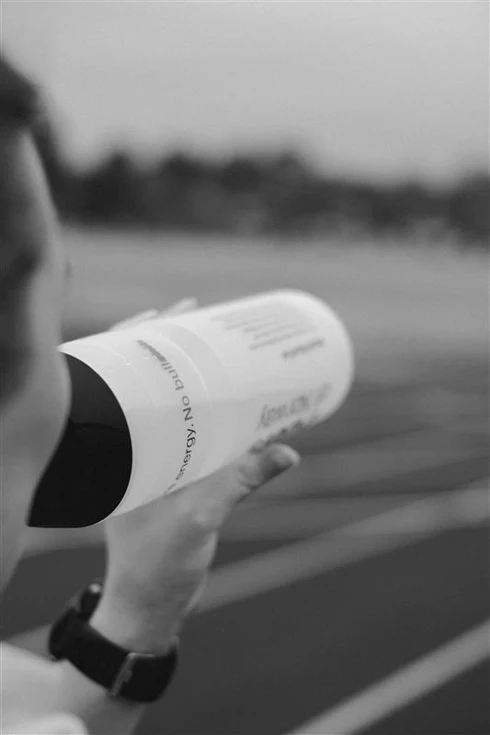
The starter pack contains a specially designed bottle with markings that make it easier to follow the protocol. Fuel of Norway writes that the bottle is carefully measured and that it should be used for correct intake.
The bottle helps you to:
Mix the right amount of water
Spread the intake over three hours
Follow the time markings
Avoid drinking too quickly
Reduce the risk of incorrect dosing
Each bottle contains, in addition to the selected amount of bicarbonate, 80 g of carbohydrates . Fuel of Norway therefore describes the product as a complete pre-race drink with both fluid, carbohydrates and bicarbonate.
This means that the product also provides energy before the start. Include these carbohydrates in your overall fueling and competition plan.
Choose a dose based on body weight and aim for approximately 0.3 g bicarbonate per kg body weight .
If you weigh around 55 kg: choose 15 g
If you weigh around 62 kg: choose 17.5 g
If you weigh around 70 kg: choose 20 g
If you weigh around 76 kg: choose 22.5 g
If you weigh around 85 kg: choose 25 g
If you are between two intervals, it may be wise to start carefully and test during training before using the product in competition.
5 km and 10 km with high intensity
Half marathon and marathon with hard competition effort
Trail and mountain runs with steep sections
Bicycle races and time trials
Gravel and MTB competitions
Cross-country skiing
Roller skis
Triathlon
Crossfit-like high-intensity competitions
Hard interval workouts
Competitions where you want to be able to maintain high intensity
The product is most relevant when intensity is high and acid load is a limiting factor.
Sodium bicarbonate can cause stomach and intestinal upset. The Australian Institute of Sport states that gastrointestinal symptoms such as nausea, stomach pain, diarrhea and vomiting are the biggest practical challenge with bicarbonate supplementation.
Therefore, always test the product during exercise first.
Practical advice:
Do not start the product on the day of the competition.
Follow the protocol carefully.
Use ice-cold water.
Drink gradually according to the markings.
Choose the right dose according to body weight.
Avoid combining with large amounts of another sports drink immediately before starting.
Discontinue use if you experience severe stomach upset.
Bicarbonate RaceFuel is high in sodium. Depending on the dosage, one serving contains approximately 4106–6843 mg of sodium .
The product should be used with extra caution if you:
Have high blood pressure
Have kidney problems
Have cardiovascular problems
Have been advised to limit salt or sodium
Using medications where sodium intake is relevant
Is sensitive to large amounts of salt
Consult with healthcare professionals if you are unsure.
Used before start according to protocol
Contains bicarbonate
Provides 80 g of carbohydrates
Contains a lot of sodium
Requires dosing according to body weight
Suitable for selected competitions and hard workouts
Used more often during the session
Provides carbohydrates and fluids continuously
Typically has lower sodium per serving
Does not require bicarbonate dosing
Suitable for wider use
Bicarbonate RaceFuel is therefore not a replacement for regular sports drinks during all sessions. It is a more specific competition tool.
Taken before start
Follows a 3-hour protocol
Contains bicarbonate and 80 g carbohydrates
Suitable as a pre-race boost
Taken before or during activity
Smaller portion size
Easier to take during races
Does not normally contain bicarbonate
Suitable as a running energy intake
Fuel of Norway states that a Loaded Gel can be taken approximately 15 minutes before the start following the Bicarbonate RaceFuel protocol.
Taken the same day before start
Has a clear 3-hour protocol
Contains 80 g carbohydrates
Contains bicarbonate and a lot of sodium
Often used the day before or hours before activity
Focuses on carbohydrates
Does not normally contain bicarbonate
Is more general upload
Bicarbonate RaceFuel is more specialized and should be used once you have tested that your body tolerates the product.
Store dry and cool.
Protect from direct sunlight.
Keep out of reach of children.
Do not use damaged sachets.
Mix only before use.
Follow the best before date on the packaging.
Clean the bottle thoroughly after use.
Choose dose according to body weight.
Follow the intake protocol carefully.
Start taking 3 hours before activity.
Drink gradually, not all at once.
Each dose contains 80 g of carbohydrates.
The product contains a lot of sodium.
Always test in training before competition.
Do not use the product if you know you react badly to bicarbonate.
Consult your healthcare provider if you have medical conditions or sodium restriction.
Sports nutrition does not replace a varied and balanced diet.
The starter pack contains 6 doses of Bicarbonate RaceFuel and a special bottle.
It includes 6 doses.
The product is available in 15g, 17.5g, 20g, 22.5g and 25g bicarbonate, with recommended weight ranges from 47 to 90kg.
Choose the dose closest to 0.3 g bicarbonate per kg body weight.
Fuel of Norway states that intake should start 3 hours before start and continue every half hour, with the last intake 30 minutes before start.
Pour the correct dose into the special bottle, fill with ice-cold water up to the 3h mark and shake well for about 1 minute.
Each dose contains 80 g of carbohydrates.
Fuel of Norway states that one bottle provides approximately 6 dl of liquid.
The product has a natural lemon and lime flavor.
The product does not contain caffeine.
The product is batch tested by LGC for prohibited substances according to anti-doping.
Fuel of Norway states that dosages above 0.3 g/kg have not shown any additional effect.
Yes. Gastrointestinal upset is a known risk with bicarbonate supplements, including nausea, stomach pain, diarrhea, and vomiting.
Yes. The product should be tested during training before use in competition, especially since tolerance to bicarbonate varies between individuals.
It may fit into a competition setup where high intensity and late fatigue are important factors, but it should be tested carefully during training first.
Yes. The product is relevant for hard cycling sessions and high-intensity competitions, such as time trials, gravel, MTB and road.
Yes. It may be relevant before hard ski races and intensive roller skiing sessions where the acid load is high.