Search
No search results found
No search results found
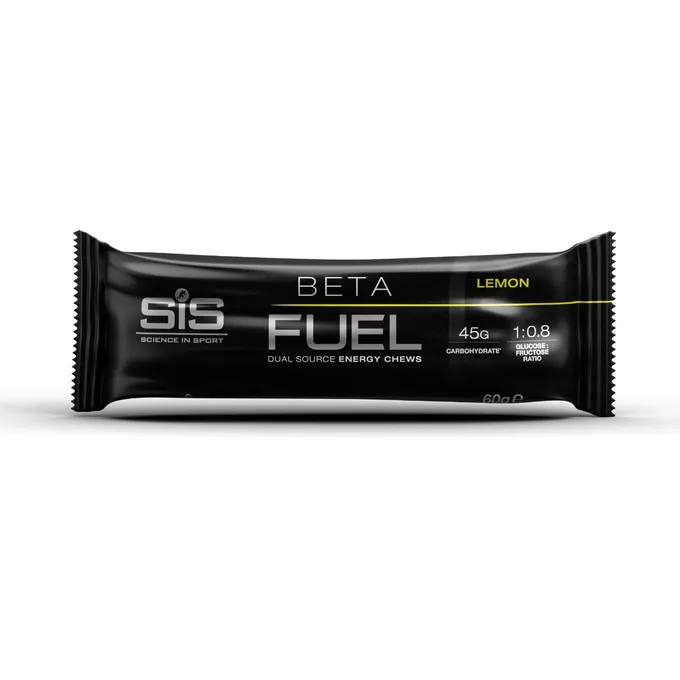
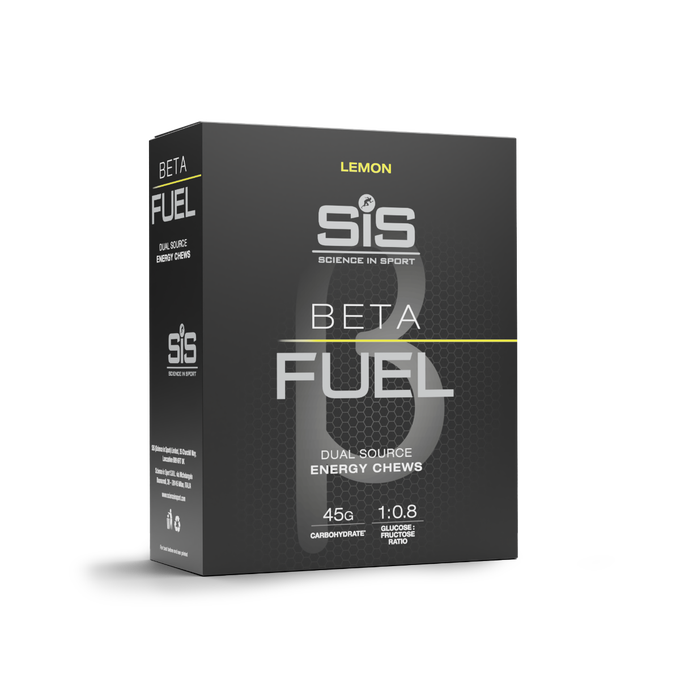
SiS Beta Fuel Energy Chews - Lemon
SiS BETA Fuel Energy Chews – Lemon is a chewable energy alternative for long training sessions and competitions where you want to vary between gels, sports drinks and solid energy.
Each 60g pack provides 46g of carbohydrates, according to SiS' European product information, and uses the BETA Fuel range's 1:0.8 carbohydrate ratio between maltodextrin and fructose . The chew is designed for endurance activities over approximately two hours and can be used alone or combined with other BETA Fuel products to achieve a planned carbohydrate intake.
The Lemon flavor gives a fresh citrus feel and the format is particularly suitable when you want to break away from liquid gels for longer runs.
See our entire range from Science In Sport here!
SiS BETA Fuel Energy Chews Lemon is developed for runners, cyclists, triathletes, skiers and other endurance athletes who need a high and easily planned carbohydrate intake during longer sessions.
Unlike a classic gel, Energy Chews have a chewable consistency, making them a great option when you want variety in your mouth during long activities, but still get the same clear BETA Fuel mindset with multiple carbohydrate sources.
SiS describes the product as a dual source, high-carbohydrate energy chew for longer endurance sessions. The official European 6-pack page states 46g of carbohydrates per 60g pack , while another SiS page states 45g . So always check the label on the supplied pack, but for EU product text , 46g of carbohydrates per 60g is the clearest current statement.
The carbohydrates come from maltodextrin and fructose in a ratio of 1:0.8 , the same basic principle as in the rest of the BETA Fuel series. SiS states that the BETA Fuel products are developed for activities over approximately two hours and for energy regimens where the athlete aims for a high carbohydrate intake, often around 80–120 g of carbohydrates per hour during longer endurance activities.
Chewable alternative to energy gel
Fresh lemon flavor
Approximately 46 g carbohydrates per 60 g package
Maltodextrin and fructose in a ratio of 1:0.8
Developed for longer endurance sessions
Can be combined with BETA Fuel gels and sports drink
Practical format for running, cycling, triathlon and skiing
Easy to divide into smaller pieces
Good variety when gels become difficult to get down
No added caffeine according to current ingredient information
Vegan formulation according to retailer information
Informed Sport certified SiS product
All Science in Sport products are certified according to the Informed Sport program, where the products are tested for substances on the WADA list of prohibited substances.
| Property | Information |
|---|---|
| Product | SiS BETA Fuel Energy Chews |
| Taste | Lemon |
| Product type | Chewable energy product |
| Serving size | 60g |
| Carbohydrates | Approximately 46 g per package according to current EU page |
| Alternative labeling | Some SiS pages state 45g per 60g |
| Carbohydrate ratio | 1:0.8 maltodextrin/fructose |
| Format | Chewable energy bar |
| Caffeine | No added caffeine according to current ingredient information |
| Use | During longer endurance training and competition |
| Recommended activity | Activities over approximately 2 hours |
| Certification | Informed Sport |
| Flavor profile | Fresh lemon |
| Nutritional value | Per 60 g package |
| Energy | Approximately 190 kcal |
| Carbohydrates | 45–46g |
| Of which sugars | Approximately 41g |
| Fat | 0 g |
| Protein | 0 g |
| Salt | Approximately 0.11g |
Current ingredient information for Lemon states, among other things: sugar, water, glucose syrup, fructose syrup, gelling agent: pectin, natural flavors, acidity regulators: citric acid, corn starch, and surface treatment agents such as coconut oil and carnauba wax.
A simple way to calculate:
1 chew pack provides approximately 46 g of carbohydrates
2 packs provide approximately 92 g of carbohydrates
1 chew plus 1 BETA Fuel Gel à 40 g provides approximately 86 g of carbohydrates
1 chew plus BETA Fuel drink can be used in a larger energy setup
A high carbohydrate intake needs to be built in gradually. Always test the amount, timing and consistency during regular training sessions before using the product in competition.
The BETA Fuel range is based on a 1:0.8 carbohydrate ratio between maltodextrin and fructose . According to SiS, this is an optimized dual source formulation for endurance athletes looking to supply high amounts of carbohydrates during longer activities.
Maltodextrin acts as a source of glucose, while fructose uses a different transport pathway in the body. By combining multiple carbohydrate sources, athletes who have trained their abs can often provide more carbohydrates per hour than with a single carbohydrate source.
Individual tolerance varies. Start with a smaller amount and build up your energy intake gradually.
BETA Fuel Energy Chews are especially useful when you want to break away from classic energy gels. During long workouts, the variety in texture and flavor can make energy intake easier to achieve.
Chews can be a good choice when you:
Tired of gels during long runs
Want to chew something instead of just drinking or swallowing gel
Want to break down the intake into smaller pieces
Needs high carbohydrate content in a compact format
Want to combine several different forms of energy
Looking for an alternative to bars that require more chewing
The product is still concentrated sports nutrition and should be used as part of a planned energy and hydration plan.
SiS states that each chew bar can be eaten whole or broken into smaller blocks. SiS's UK product information states six blocks with 7.5g of carbohydrates per block, based on 45g of carbohydrates per pack.
A practical approach could be:
Open the package before or during activity.
Eat the whole chew or break it into smaller pieces.
Spread the intake over several minutes if the intensity is high.
Combine with water or sports drink as needed.
Count carbohydrates from all other products.
The product can be used alone or in combination with other BETA Fuel products to achieve a total intake of 80–120 g of carbohydrates per hour during longer endurance activities.
1 BETA Fuel Energy Chew Lemon
Water separately as needed
1 BETA Fuel Energy Chew Lemon
1 BETA Fuel Gel with 40 g carbohydrates
2 BETA Fuel Energy Chews Lemon
Fluid and electrolytes are planned separately
BETA Fuel Energy Chews for variety
BETA Fuel Gel for faster intake
BETA Fuel Drink for fluid and carbohydrates at the same time
These are examples, not individual recommendations. Adjust intake according to activity length, temperature, intensity, stomach, and previous experience.
BETA Fuel Energy Chews are not a beverage and do not replace fluids. During longer sessions, water or sports drink needs to be planned separately.
Liquid along with chews can help to:
Make them easier to swallow
Reduce sticky feeling in the mouth
Facilitate energy intake at high intensity
Support a consistent fluid intake
Combine carbohydrates with electrolytes when needed
When running, it can be smart to take chews near hydration stations. When cycling, they can be eaten gradually between bottle intakes.
Marathon
Ultramarathon
Trail and mountain running
Long bike races
Gravel and mountain biking
Triathlon
Cross-country skiing
Vasaloppet and other long-distance races
Long distance workouts
Training camp
Activities over approximately two hours
Athletes who want to vary their chewable energy gels
SiS BETA Fuel Energy Chews are developed for longer workouts and endurance activities over approximately two hours.
The Lemon flavor provides a fresh and tart citrus note that works well when sweeter gels or bars start to feel heavy. The chew has a jelly-like consistency and can be eaten as a whole bar or broken into smaller pieces.
The flavor is especially good when you want:
Fresh citrus flavor
Less heavy flavor profile
Variation from orange, berries and cola
A chew-friendly alternative to gel
A product that is easy to divide over time
The consistency can be affected by temperature. Chews can become firmer in cold weather, while they can become softer in heat.
Chewable texture
Approximately 45–46 g of carbohydrates per 60 g
Good variety during long sessions
Can be divided into smaller pieces
Requires more chewing than gel
Liquid gel consistency
40 g carbohydrates per gel
Quick to consume
Easier at high intensity
Takes less time to digest
Chews are suitable when you want something to chew on and break up from gel. Gel is better suited when the pace is high and you want to get your energy in quickly.
Compact carbohydrate portion
Easy to carry
Provides variation in texture
Liquid needs to be planned separately
Combines fluid and carbohydrates
Consumed gradually
Requires bottle or hydration bladder
May be easier at very high intensity
Many athletes combine both. Always add up the carbohydrates from chews, gels, drinks and any food.
High carbohydrate content
Softer and more jelly-like texture
Lower focus on fat, fiber and protein
Easier at endurance intensity
More food-like feel
Can provide greater satiety
Requires more chewing
Often suitable for calmer parts of long sessions
Choose chews when you want concentrated carbohydrates. Choose bars when you want more satiety and variety during the calmer parts of an adventure or long workout.
SiS Science in Sport products are certified under Informed Sport . The program includes review and testing for substances on the WADA banned list.
It is relevant for:
Elite athlete
Competitive exercisers
Teams and associations
Athletes subject to anti-doping rules
The athlete still has their own responsibility for checking the product and the current batch.
Store the product dry and cool.
Protect from direct sunlight.
Avoid prolonged storage in a hot car.
Keep the package closed until ready to use.
Consume opened product during the session.
Follow the best before date on the packaging.
Bring empty packaging and throw it in the designated waste.
The product is rich in carbohydrates and intended for use during physical activity.
Add up the carbohydrates from all products.
High carbohydrate intake should be introduced gradually.
Chews do not replace water or electrolytes.
Test the product during training before competition.
The consistency can be affected by temperature.
Always check the current ingredient and allergen information.
Sports nutrition does not replace a varied and balanced diet.
One package weighs 60 g.
46 g carbohydrates per 60 g package.
The product uses the BETA Fuel series' 1:0.8 ratio of maltodextrin to fructose.
No. It is a chewable energy product, not a liquid gel. It can be used as a variation on gels and sports drinks.
Eat the chew whole or break it into smaller pieces during activity. SiS states that it can be used alone or combined with other BETA Fuel products.
SiS recommends 1–3 chew bars per hour depending on sport, activity and carbohydrate intake goals. Such a high intake should be worked into gradually.
Yes. It can be used in a marathon setup, especially by runners who want to alternate between gels and chewable energy. Always test during a long run before a race.
Yes. Chews can be a good option during ultra running because they provide variety in texture and can be broken down over time.
Yes. The product is easy to carry in your pocket and can be eaten gradually during longer cycling sessions and races.
The current Lemon formulation is not listed as a caffeine variant, but always check the packaging if caffeine is important to your setup.
The product is vegan.
The product may contain traces of eggs, fish, milk and soy.
Yes. Products are certified under the Informed Sport program.
BETA Fuel Gel is liquid and provides 40g of carbohydrates per gel. BETA Fuel Energy Chews are chewable and provide approximately 45-46g of carbohydrates per 60g pack.
Yes. SiS chews can be used together with other products in the BETA Fuel series to achieve a planned carbohydrate intake.